
Custom stairs and railings in Portland
A staircase is the most looked at woodwork in a house and the least forgiving to build. We rebuild treads and risers in solid hardwood, mill custom stair noses, install runners, and build railings from the posts up.
★ 5.0 on Google·300+ remodels·Family owned
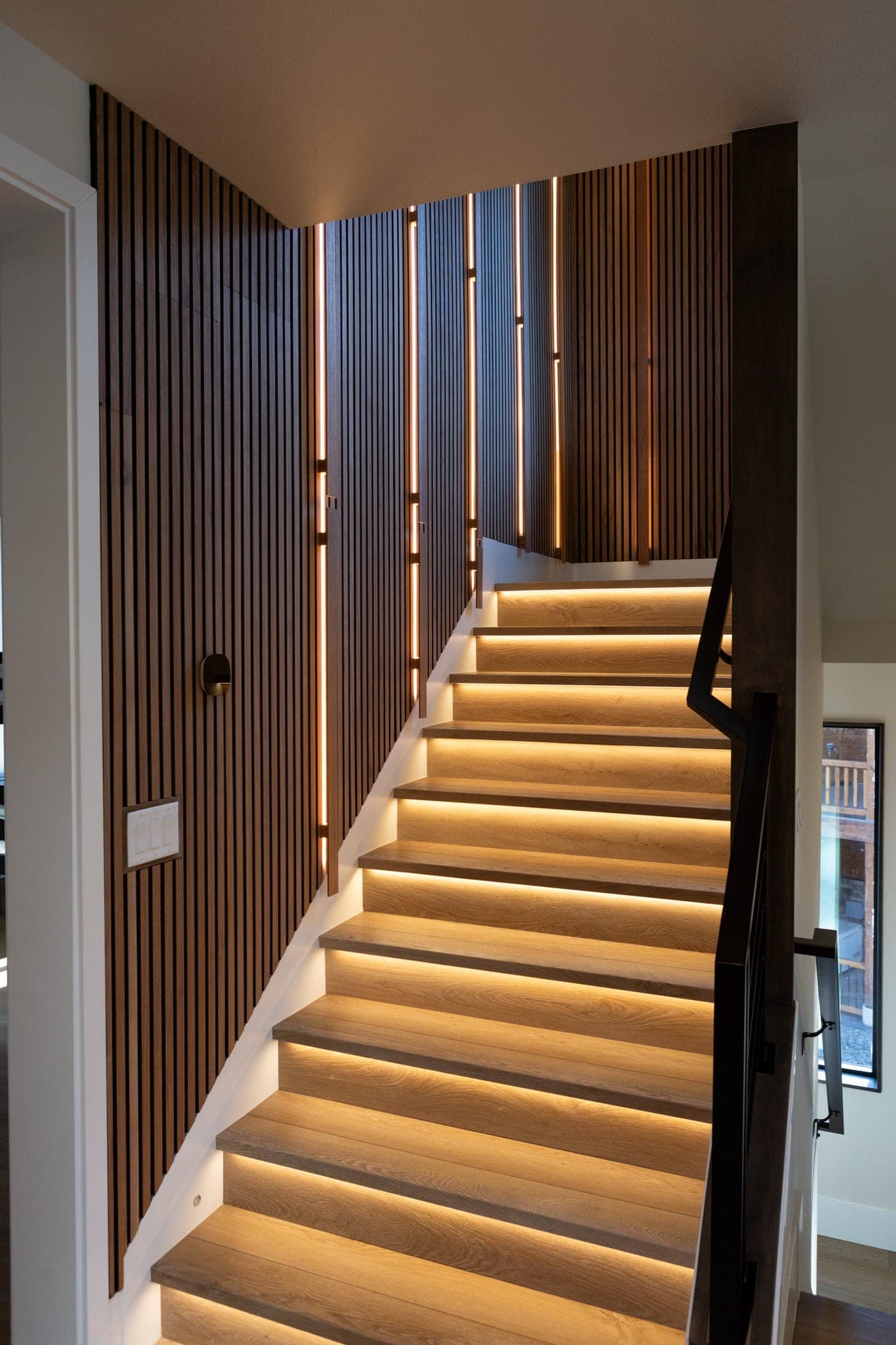
What does a custom staircase remodel involve?
Rebuilding a staircase means new solid hardwood treads and risers, a custom milled stair nose at the front edge of each tread, and finish work where the stairs meet the floor above and below. Railings are a separate build: posts anchored into the framing, balusters or metal spindles set plumb, and a handrail shaped and joined to run continuously around landings and turns.
Treads and noses
Hardwood treads and custom stair noses
Solid hardwood treads matched to the floor they meet, with stair noses milled to the profile the design calls for rather than pulled off a shelf. The nose is the edge every foot lands on and every eye follows down the flight, so it gets made to fit.
Runners
Carpet runners on hardwood stairs
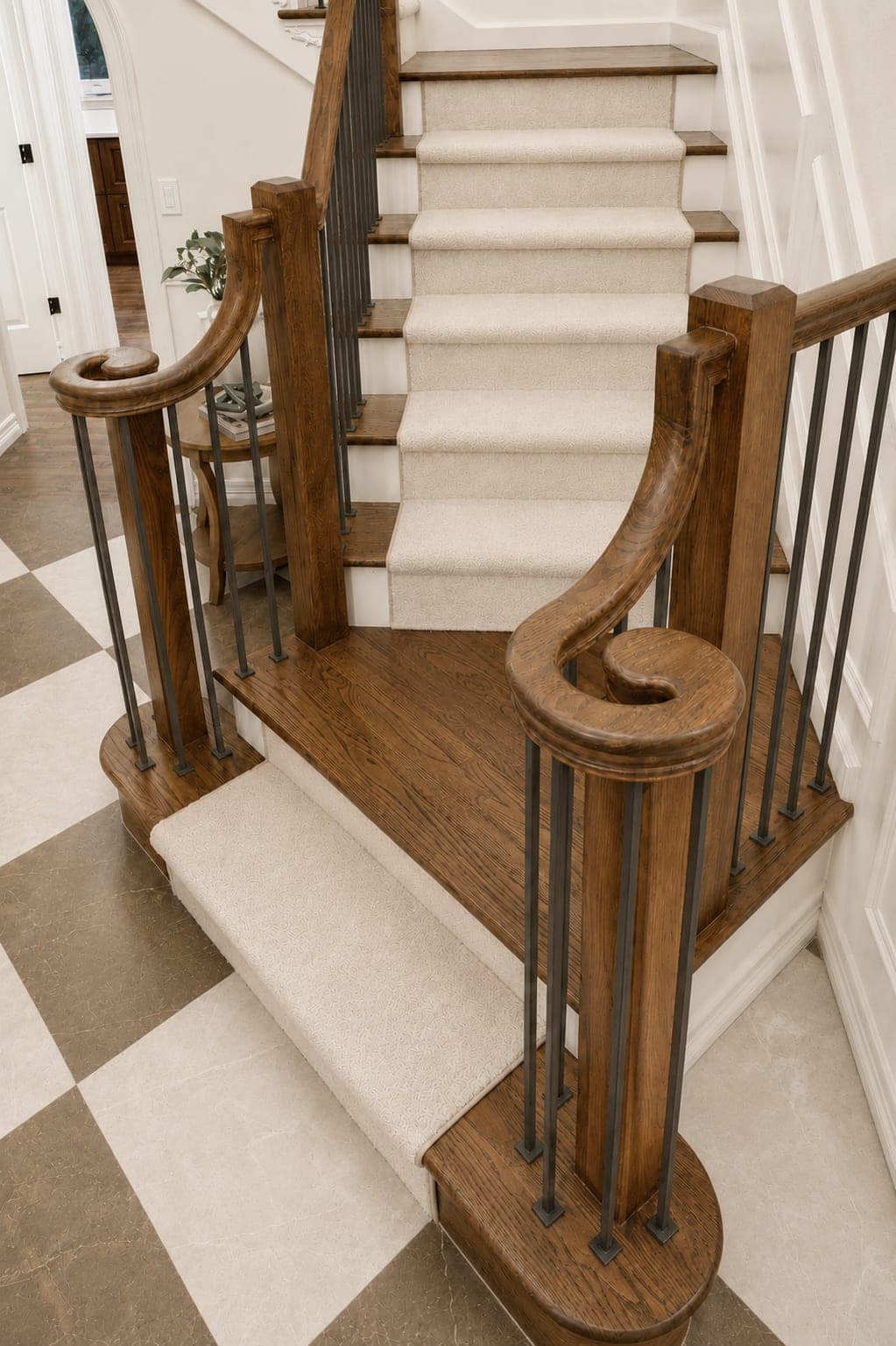
A runner gives you traction and quiet without hiding the wood. We set the runner centered with even reveals on both sides, wrapped tight at every nose, so the lines stay parallel the whole way down instead of wandering a quarter inch per step.
Railings
Custom railings, posts, and spindles
Wood handrails, black metal spindles, and squared or turned posts, anchored into framing so nothing moves under a hand. We build to code on rise, run, and baluster spacing, then join the handrail so it flows around landings without a visible seam.
Carpet
Carpet installation
We install carpet as well, on stairs and in the rooms where it still makes sense: bedrooms, bonus rooms, and basements. Same prep standard as any other floor, with the subfloor flattened and fastened before anything is laid.
Recent work
Recent staircases and railings
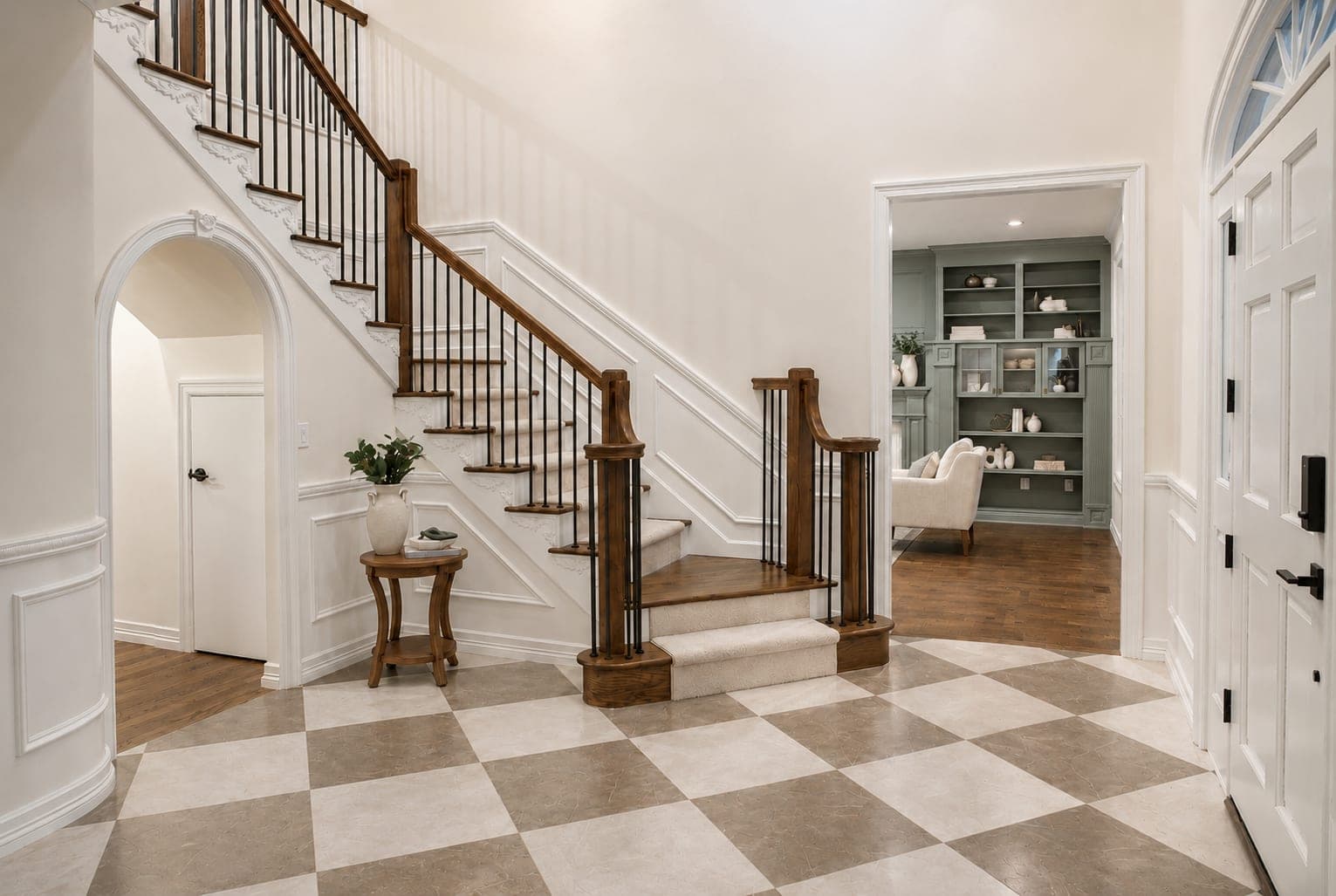
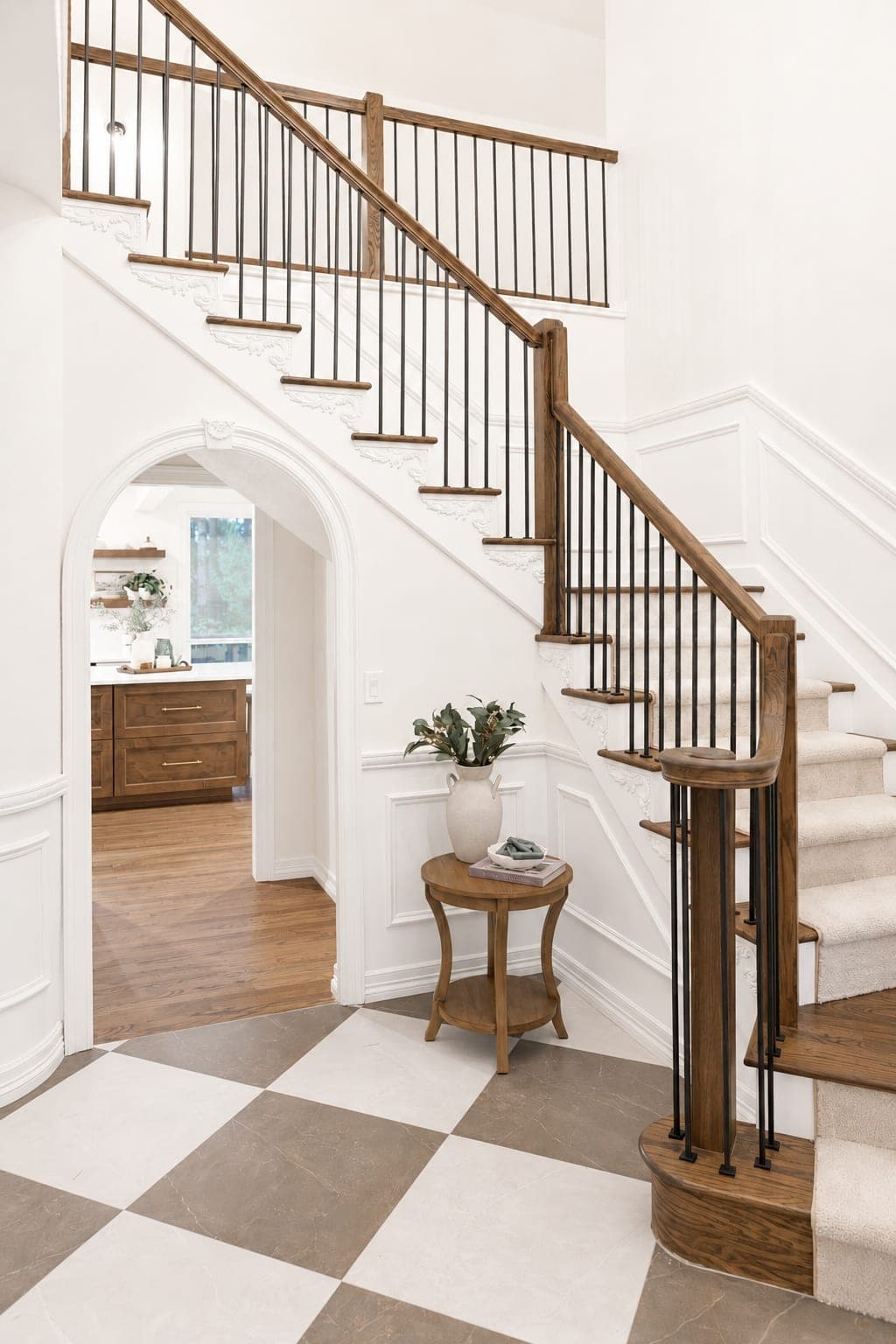
Foyers and staircases rebuilt across the Portland metro.
FAQ
Stairs and railing FAQs
Costs, timelines, and how the work is built.
Can you replace carpeted stairs with hardwood?
Yes, and it is one of the more dramatic changes you can make in an entry. We pull the carpet, assess the treads underneath, which in most homes are construction grade material never meant to be seen, and install solid hardwood treads with custom stair noses over them. You can finish them bare or add a runner.
Do you have to replace the railing when you redo the stairs?
Not always. If the posts are solid and the handrail is in good shape, we can refinish the existing railing to match new treads. Railings get replaced when they are loose at the posts, when the baluster spacing does not meet current code, or when the style no longer fits the house.
What is a stair nose and why does it need to be custom?
The stair nose is the shaped front edge of each tread that overhangs the riser. Stock noses come in a handful of profiles and species, and they rarely match a floor exactly, so the edge of every step reads slightly off. Milling the nose to match the flooring means the tread and the floor look like one material.
Are your stairs and railings built to code?
Yes. Rise and run consistency, handrail height and graspability, and baluster spacing that will not pass a four inch sphere are all code items inspectors check, and they exist because stairs are where people get hurt. We build to those requirements and pull permits where the work requires them.
All details matter.
A bathroom or kitchen remodel is hundreds of small decisions. Which tile, where the layout gives and where it holds, what gets fixed once the wall is open. We work through them with you instead of guessing, and you hear from us at every step, not just when something goes wrong. That is what you are actually hiring: skilled trades who sweat the details and answer the phone. Tell us about your space and we will put a real number on it.